Rainbow Street, Amman: History, Cinema & Complete Guide
The street that started as a residential quarter for Amman's early elite, was renamed after a cinema, and became the cultural heart of the city. Everything you need to know — and do — on Rainbow Street.
A brief history of Rainbow Street
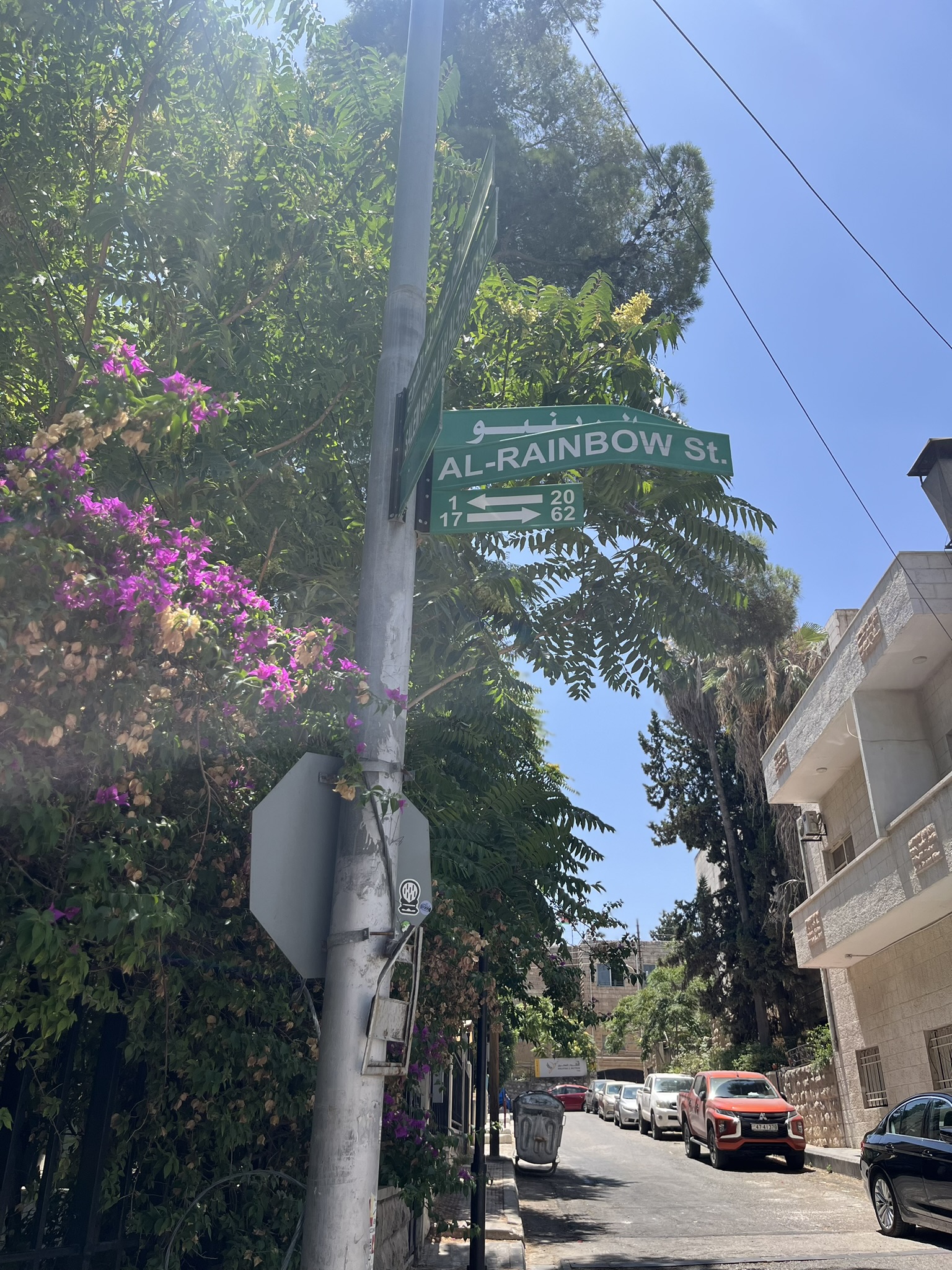
The street now known as Rainbow Street was not always called that. For much of the early twentieth century it was named Abu Bakr al-Siddiq Street, and it ran through one of the most desirable residential areas in Amman — a ridge in the Jabal Amman district where wealthy families had built their homes above the noise and density of the city centre below.
Before that, the area had been a small settlement on the edge of Amman, occupied mainly by Bedouin families drawn by the springs and fertile land nearby. As Amman grew through the first half of the twentieth century — rapidly and unexpectedly, from a small Circassian village to the capital of a new country — the gardens and orchards of Jabal Amman were replaced by stone villas and residential streets. The ridge became one of the quieter, more elegant parts of the expanding city.
What changed the character of the street permanently was a cinema.
The Rainbow Cinema, 1957
In 1957, the Rainbow Cinema opened on Abu Bakr al-Siddiq Street and immediately became one of the most important social venues in Amman. At a time when cinema was one of the primary forms of public entertainment, a well-run movie house in a central location drew people from across the city. The Rainbow showed international films and became a meeting point for Amman's growing middle class — professionals, students, artists, and families who arrived for the film and stayed to walk the street afterwards.
The cinema gave the street its name. Over time, people stopped using the official street name and simply referred to it as Rainbow Street — the street where the Rainbow was. The informal name stuck, and it eventually became official.
The building still stands, though it has changed considerably. Today it operates as the Rainbow Theater — an art-house cinema and cultural venue that hosts film cycles, festivals, lecture series, and small performances. The shift from commercial cinema to cultural space mirrors what happened to the street as a whole: from a place of mainstream entertainment to something more eclectic and independent.
Architecture and character
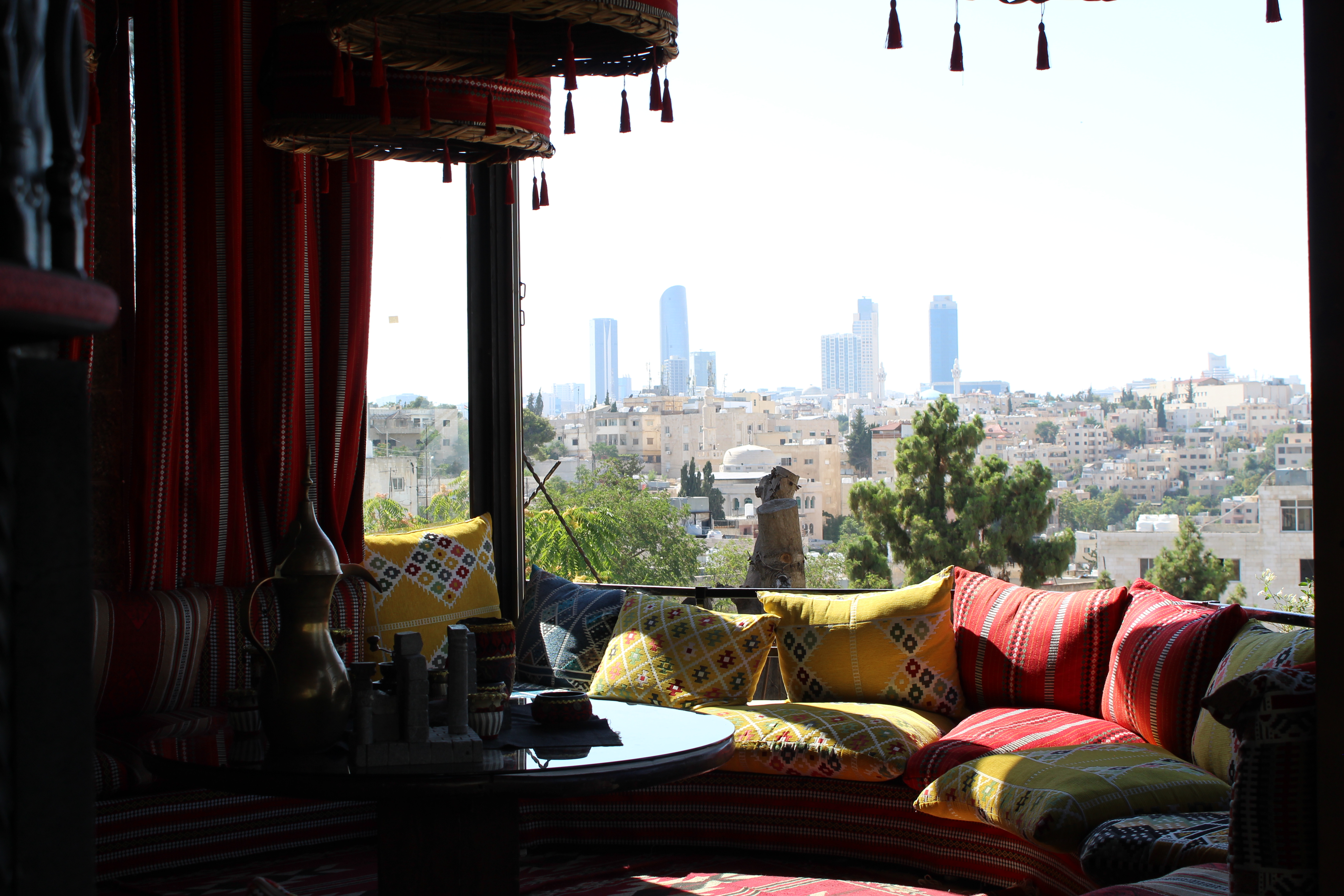
One of the most striking things about Rainbow Street is how much of the original architecture survives. The area around First Circle and along the ridge is still lined with early-twentieth-century stone villas — many of them built in the Syrian style, with high balconied walls enclosing central courtyards. The materials are the pale limestone that defines much of Amman's older building stock, warm in sunlight and cool in shade.
Several of these historic buildings have been converted into restaurants, galleries, and cultural spaces — a pattern that has given Rainbow Street its current character. The buildings themselves are part of the experience: high ceilings, arched windows, stone staircases leading up from the street. Walking the ridge on a clear day, with views south toward the city centre and the hills beyond, it is easy to understand why this particular strip of Amman became what it is.
The street runs roughly 800 metres from First Circle toward Mango Street, with most of the restaurants, cafés, and galleries concentrated in the central section. Side streets branch off down the hillside, leading to quieter residential lanes that still feel like a different era.
What to do on Rainbow Street today
The street is most active from late morning through to midnight. Early morning is quieter — ideal for a walk before the day heats up.
Rainbow Theater (the former Rainbow Cinema)
The building the street was named after. Today it is an art-house cinema and cultural venue hosting film cycles, festivals, and lecture series. Worth checking what is on before you visit.
Jordan National Gallery of Fine Arts
One of the most significant art institutions in the Arab world, with a permanent collection of modern and contemporary works from Jordan and across the region. The sculpture park outside is free to wander.
Darat Al Funun
A set of three restored 1920s villas with a hillside garden, dedicated to modern Arab art. Within the grounds lie the remains of a sixth-century Byzantine church. Exhibitions, screenings, and concerts are held throughout the year.
Al-Quds Falafel
The falafel counter that has been on the street since 1966. Takeout only, no seating. Go before 9 AM for the first fresh batch.
Jafra
A beloved café and gathering place on Rainbow Street known for live music, Arabic coffee, and a crowd that stays late into the evening.
Independent shops and galleries
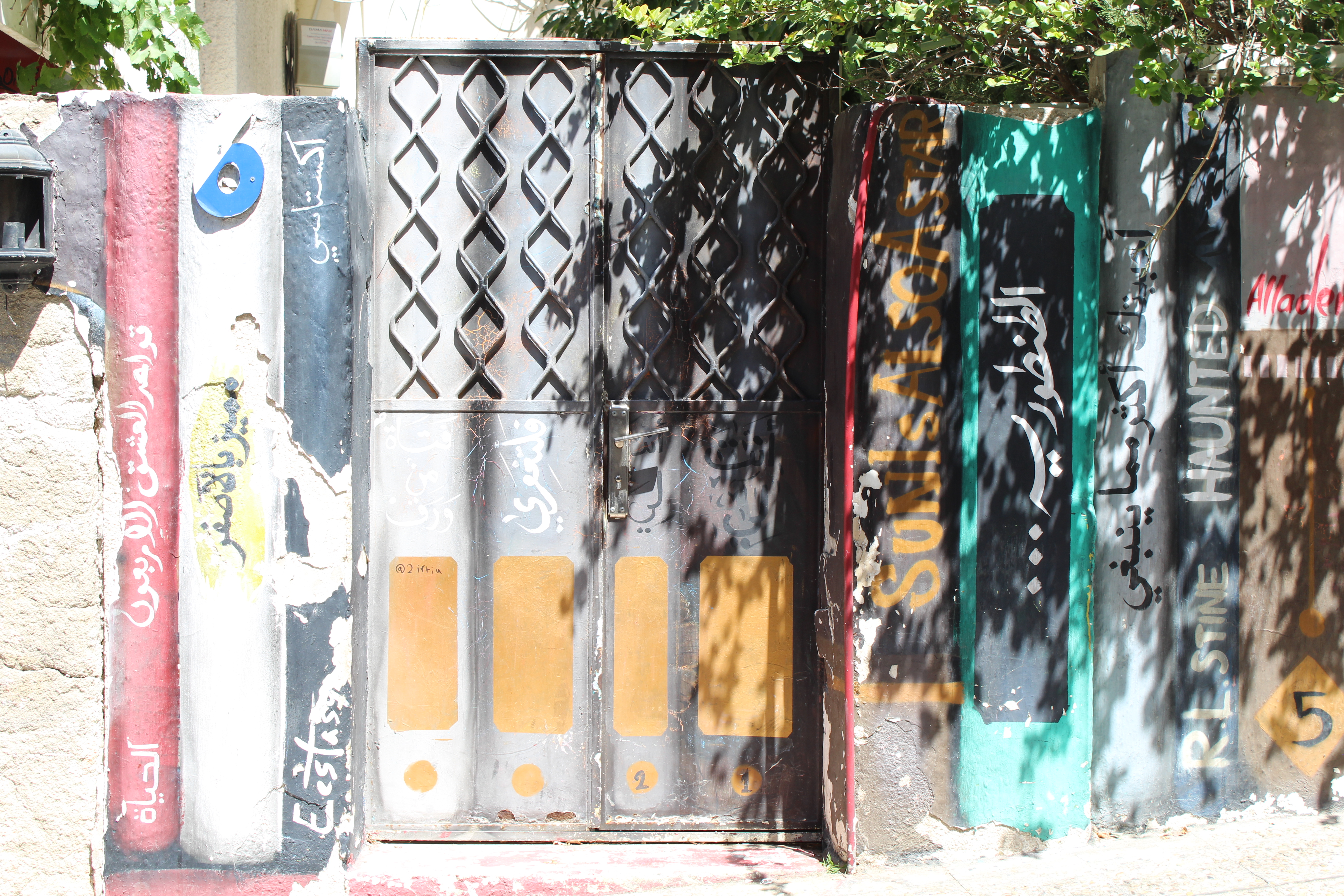
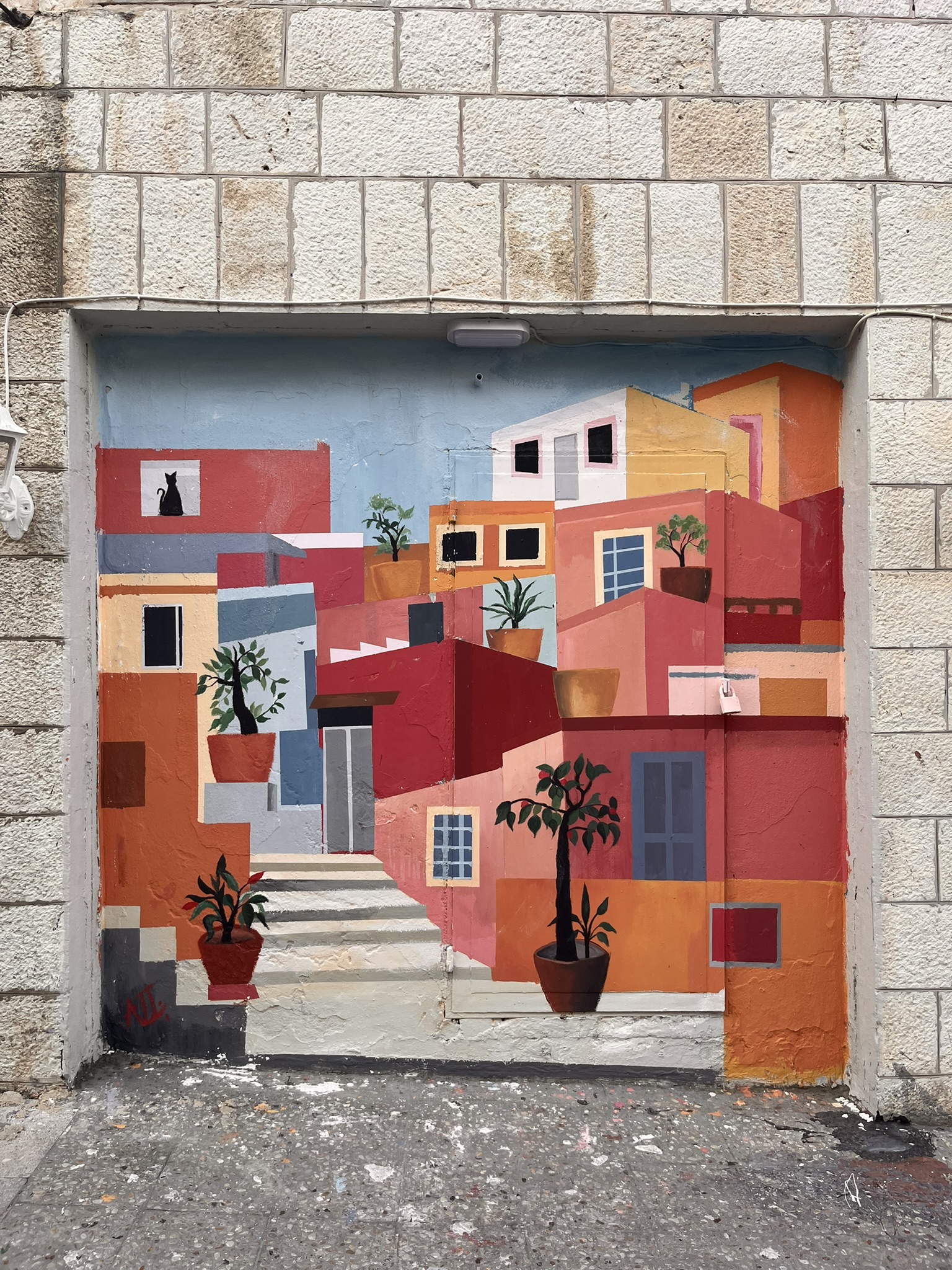
The street and its side alleys are home to independent boutiques selling Jordanian crafts, design pieces, vintage goods, and local art prints.
Practical information
Getting there
Rainbow Street begins at First Circle. Taxis from downtown take 5–10 minutes. Most visitors arrive by car — park at First Circle and walk.
Best time to visit
Early morning (7–9 AM) for breakfast and a quiet walk. Evening (6–10 PM) for the full social scene — restaurants and cafés are busiest then.
How long to spend
A relaxed morning walk takes 1–2 hours. The Zowar guided experience runs 3–4 hours and covers the street end to end with stops and tastings.
Getting around
Rainbow Street is fully walkable. Comfortable shoes are recommended as parts of Jabal Amman are hilly. The side streets leading to Weibdeh are worth exploring on foot.
Frequently asked questions
Why is it called Rainbow Street?
The street was renamed after the Rainbow Cinema, which opened in 1957. Before that it was known as Abu Bakr al-Siddiq Street. The cinema became such a landmark that people started calling the whole street by its name.
Is Rainbow Street safe?
Yes. Rainbow Street and the Jabal Amman area are among the safest and most visited parts of Amman. It is well-lit in the evenings and consistently busy.
What neighbourhood is Rainbow Street in?
Rainbow Street runs through Jabal Amman, near the First and Second Circles. The adjacent neighbourhood of Jabal Al-Weibdeh is a short walk to the north and shares much of the same character.
Can you walk from Rainbow Street to downtown Amman?
Yes, the walk down from First Circle to downtown takes about 15–20 minutes on foot through the older hillside streets. It is a steep descent but worthwhile.
Experience it yourself
Explore Rainbow Street with Zowar
Zowar is a self-guided puzzle experience that takes you through Rainbow Street and Weibdeh with stops at local venues for tastings and discoveries. Over 25 JOD in food and gifts are included across a half-day adventure — starting from 25 JOD per person.